Visi Blue 0.5 ml (Trypan Blue): Complete Guide to Uses, Dosage, Benefits, Side Effects & FAQs
Introduction to Visi Blue
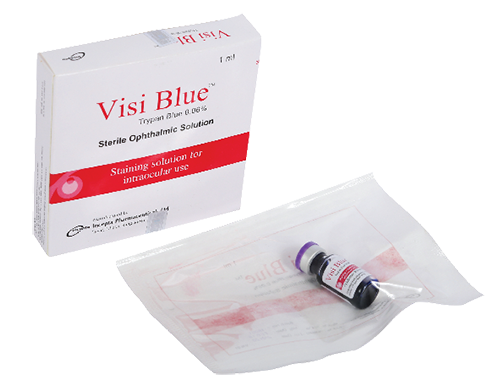
Visi Blue is a specialized ophthalmic prescription medicine used as a diagnostic aid during eye surgeries, most notably cataract surgery. Categorized under Prescription Medicines, Oral Medicines (though administered locally), and Rare Disease & Orphan Drugs, it serves as a vital tool for surgeons to improve precision. Instead of treating a disease directly, Visi Blue provides high-contrast visualization of delicate eye structures that are otherwise transparent.
Think of Visi Blue as a surgical highlighter. Rather than altering the eye’s biology, the active ingredient Trypan Blue stains specific membranes to make them visible against the rest of the eye tissue. This guide explains what Visi Blue is, how Trypan Blue works, its surgical uses, and the safety precautions necessary during its administration.
Drug Class and Mechanism of Action
Visi Blue is classified as an ophthalmic diagnostic agent or a tissue-staining dye. During complex surgeries, certain parts of the lens can be difficult to see because they are clear and colorless.
Trypan Blue works by selectively binding to the connective tissue of the anterior lens capsule. This staining process does not penetrate the capsule itself but creates a dark blue contrast against the unstained lens cortex and inner material. This “disclosing” effect allows the surgeon to perform controlled incisions with much higher accuracy.
How Visi Blue Works in the Body
During an operation, the surgeon requires a clear map of the surgical site. Visi Blue assists this process by:
-
Staining the anterior capsule of the human crystalline lens.
-
Creating a sharp visual distinction between different layers of the eye.
-
Facilitating a safer “capsulorhexis” (the opening of the lens bag) during cataract removal.
Because Trypan Blue is applied directly into the eye and then washed out, it does not have a systemic effect on the rest of the body.
Medical Uses of Visi Blue
Visi Blue is primarily indicated for use in the operating room to assist in specialized ophthalmic procedures.
Visi Blue for Cataract Surgery
Visi Blue is a standard aid for surgeons treating patients with “mature” or “white” cataracts, where the red reflex is absent. Benefits for the procedure include:
-
Enhanced visibility of the lens capsule under a surgical microscope.
-
Reduced risk of surgical complications like “Argentinean Flag Sign” (uncontrolled tearing).
-
Assistance in training residents to perform delicate eye maneuvers.
Visi Blue for Pediatric Ophthalmic Surgery
Visi Blue is also approved for use in pediatric patients. Studies have shown that Trypan Blue provides the same safety and efficacy in children as it does in adults, helping surgeons manage the unique challenges of younger, more elastic eye tissues.
Who Can Be Treated with Visi Blue?
Visi Blue is a professional-grade surgical tool and is only used by trained ophthalmologists in a clinical setting.
Eligibility Criteria
You may be a candidate for the use of Visi Blue during your procedure if:
-
You are undergoing cataract surgery or a similar lens-related procedure.
-
Your surgeon determines that staining is necessary for a safe and successful outcome.
Who Should Avoid Visi Blue
Visi Blue may not be appropriate, or requires extreme caution, if:
-
A non-hydrated, hydrophilic acrylic intraocular lens (IOL) is planned for insertion, as the dye may be absorbed by the lens and cause permanent staining.
-
You are pregnant (Pregnancy Category C), as Trypan Blue should only be used if the potential benefit justifies the potential risk to the fetus.
-
You have a known hypersensitivity to any of the components in the solution.
Visi Blue Dosage and Administration
Standard Administration Guidelines
Visi Blue is administered strictly by a healthcare professional during surgery:
-
Preparation: An air bubble is often injected into the eye’s anterior chamber first to prevent the dye from being diluted by natural eye fluids.
-
Application: Trypan Blue is carefully applied onto the anterior lens capsule using a blunt cannula.
-
Irrigation: Once staining is achieved, the surgeon must immediately and thoroughly irrigate (wash) the eye to remove all excess Visi Blue.
Dosage Form
It is typically supplied in a single-patient-use syringe (0.5 ml) containing a 0.06% concentration of the active dye.
Side Effects of Visi Blue
Common Side Effects
-
Temporary discoloration of the eye’s internal structures.
-
Blurred vision immediately following the procedure.
Serious Side Effects
-
Inadvertent staining of the posterior lens capsule or vitreous face (usually clears within one week).
-
Discoloration of certain types of high-water-content intraocular lenses if used incorrectly.
Frequently Asked Questions (FAQs)
1. Is Visi Blue safe for children? Yes, the safety and effectiveness of Visi Blue have been confirmed in pediatric patients for use during eye surgery.
2. Will Visi Blue turn my eyes blue forever? No. While Trypan Blue stains the internal tissues during surgery, the excess dye is washed out by the surgeon. Any minor accidental staining usually disappears within a week.
3. Is Visi Blue a medicine I take at home? No. Visi Blue is a surgical diagnostic tool administered only by a doctor in a hospital or clinic setting.
4. Can I use Visi Blue if I am breastfeeding? Caution is advised. It is not known if Trypan Blue is excreted in human milk, so you should discuss this with your surgeon prior to the procedure.