
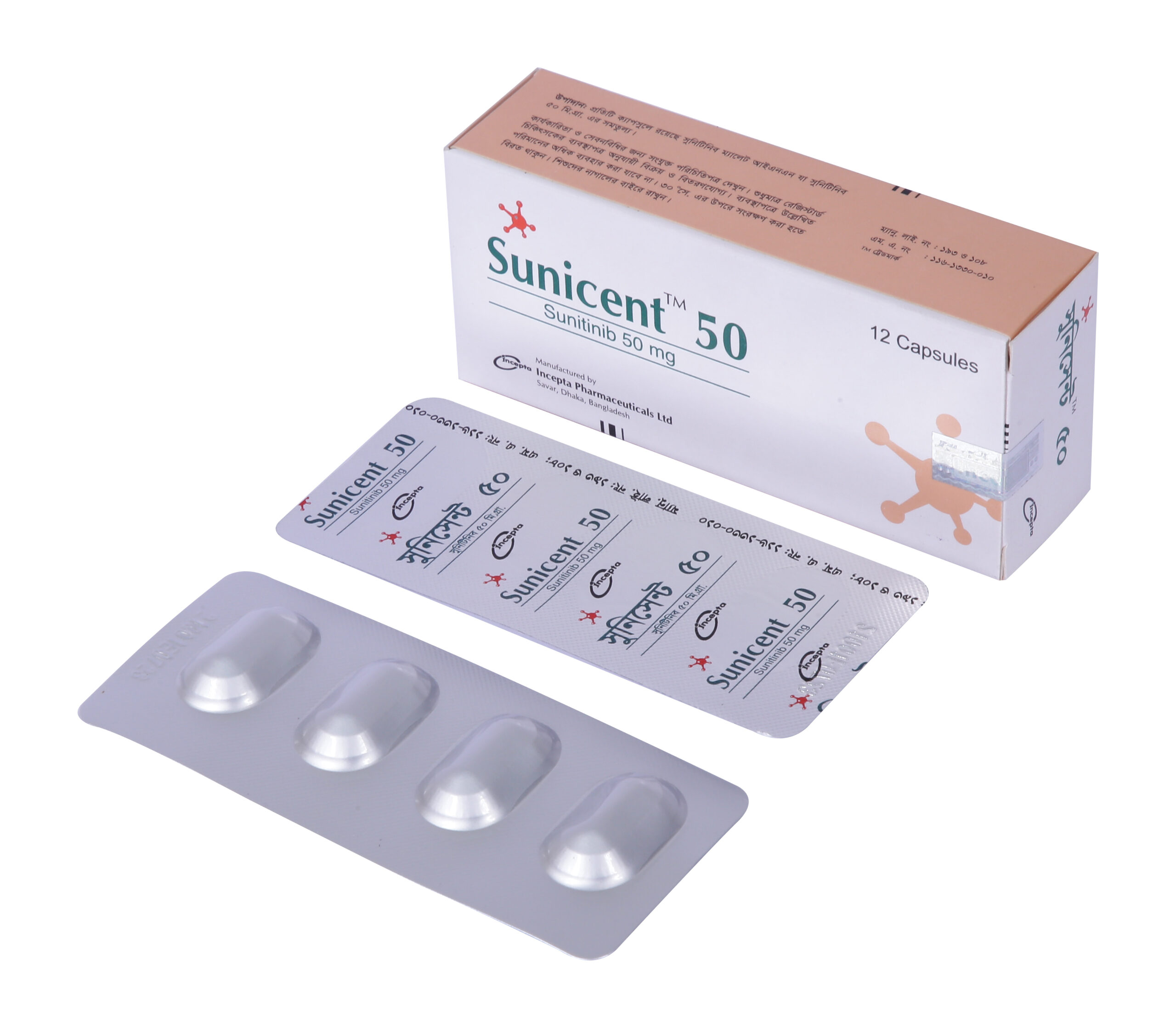
Sunicent 50 mg (Sunitinib): Complete Guide to Uses, Dosage, Benefits, Side Effects & FAQs
Introduction to Sunicent 50 mg
Sunicent 50 mg is a high-specialty prescription medicine used in the treatment of advanced cancers, specifically those affecting the kidneys, stomach, and pancreas. Categorized under Oncology & Cancer Medicines, Anticancer Medicines, and Prescription Medicines, it is a targeted therapy known as a multi-kinase inhibitor. Unlike general chemotherapy, Sunicent 50 mg focuses on blocking the specific signals that allow cancer cells to grow and receive blood supply.
Think of Sunicent 50 mg as a “starvation therapy” for tumors. The active ingredient Sunitinib works by cutting off the fuel lines (blood vessels) to the tumor while simultaneously blocking the growth signals that tell the cancer cells to multiply. This guide provides a detailed look at how Sunicent 50 mg functions, its clinical uses, and the essential management of its side effects.
Drug Class and Mechanism of Action
Sunicent 50 mg belongs to a class of drugs known as Tyrosine Kinase Inhibitors (TKIs). It is a “multi-targeted” inhibitor, meaning it blocks several different proteins (enzymes) involved in cancer progression.
Sunitinib works by inhibiting multiple receptor tyrosine kinases, including:
-
VEGFR (Vascular Endothelial Growth Factor Receptors): This blocks angiogenesis, the process by which tumors grow new blood vessels to feed themselves.
-
PDGFR (Platelet-Derived Growth Factor Receptors): This interferes with the structural support and growth of the tumor.
-
KIT and FLT3: These are involved in the abnormal signaling that drives specific types of cancer cell division.
How Sunicent 50 mg Works in the Body
In advanced malignancies, tumors “hijack” the body’s resources to grow. Sunicent 50 mg manages the disease by:
-
Inhibiting the “angiogenic switch,” effectively starving the tumor of oxygen and nutrients.
-
Directly stopping the signals that trigger rapid cell division.
-
Slowing or stopping the spread (metastasis) of the cancer to other parts of the body.
By attacking the tumor on multiple fronts, Sunitinib helps stabilize the disease and can shrink existing tumors.
Medical Uses of Sunicent 50 mg
Sunicent 50 mg is indicated for the treatment of three specific types of cancer.
Sunicent 50 mg for Renal Cell Carcinoma (RCC)
It is a primary treatment for advanced or metastatic kidney cancer. Clinical use of Sunitinib in RCC helps:
-
Delay the progression of the disease.
-
Improve overall survival rates in patients with clear-cell renal cancer.
Sunicent 50 mg for GIST (Gastrointestinal Stromal Tumor)
It is used to treat stomach/intestinal tumors in patients whose disease has progressed or who cannot tolerate the first-line drug, Imatinib. Benefits include:
-
Controlling the growth of tumors that have become resistant to other therapies.
-
Providing a significant therapeutic alternative for rare gastrointestinal cancers.
Sunicent 50 mg for Pancreatic Neuroendocrine Tumors (pNET)
It is indicated for progressive, well-differentiated pancreatic tumors that cannot be removed by surgery.
Who Can Take Sunicent 50 mg?
Sunicent 50 mg is a potent medication that requires close monitoring by an oncologist.
Eligibility Criteria
You may be considered for Sunicent 50 mg if you:
-
Have a confirmed diagnosis of advanced RCC, GIST, or pNET.
-
Have stable heart and liver function (as assessed by your doctor).
Who Should Avoid Sunicent 50 mg
Sunicent 50 mg may not be appropriate for individuals who:
-
Have severe heart disease or uncontrolled high blood pressure.
-
Have a history of severe bleeding disorders.
-
Are pregnant or breastfeeding (it can cause severe birth defects).
Sunicent 50 mg Dosage and Administration
Standard Dosage Guidelines
-
The “4/2 Schedule”: For RCC and GIST, the standard dose is often 50 mg once daily for 4 weeks, followed by a 2-week rest period.
-
Continuous Schedule: For pNET, a lower dose (usually 37.5 mg) is taken daily without a rest period.
-
Consistency: Take it at the same time every day, with or without food. Swallow the capsule whole.
Monitoring Requirements
While on Sunicent 50 mg, you will need:
-
Regular blood pressure checks.
-
Periodic heart function tests (EKG or MUGA scans).
-
Blood tests to monitor thyroid and liver function.
Side Effects of Sunicent 50 mg
Common Side Effects
-
Fatigue: Extreme tiredness is very common.
-
Hand-Foot Syndrome: Redness, pain, or peeling on the palms of hands and soles of feet.
-
Digestive issues: Diarrhea, nausea, or changes in taste (metallic taste).
-
Skin/Hair Color: Skin and hair may turn yellow or lose color temporarily.
Serious Side Effects
-
Heart failure: Shortness of breath or swelling.
-
Hypertension: A sudden spike in blood pressure.
-
Bleeding: Unusual bruising or nosebleeds.
-
Thyroid dysfunction: Usually hypothyroidism (underactive thyroid).
Frequently Asked Questions (FAQs)
1. Why does Sunicent 50 mg have a 2-week rest period? For kidney cancer and GIST, the “off period” allows your body to recover from side effects like fatigue and hand-foot syndrome before the next cycle starts.
2. Does Sunicent 50 mg turn my skin yellow? Yes, Sunitinib is a yellow substance and can cause a temporary yellowing of the skin or hair. This is not jaundice (liver failure), but a direct effect of the drug’s color.
3. Can I take Sunicent 50 mg with other medications? Be careful with St. John’s Wort and grapefruit juice, as they can interfere with how your body processes Sunitinib. Always disclose all supplements to your oncologist.
4. What should I do if my hands and feet start hurting? This is likely Hand-Foot Syndrome. Use thick, urea-based moisturizers and avoid hot water or tight shoes. Inform your doctor, as they may need to adjust your dose.
Medical Disclaimer: This content is for informational purposes only. Oncology treatment requires expert medical supervision. Always consult your oncologist before making changes to your treatment plan.


