Sulmetic IV 5 mg (Amisulpride): Complete Guide to Uses, Dosage, Benefits, Side Effects & FAQs
Introduction to Sulmetic IV 5 mg
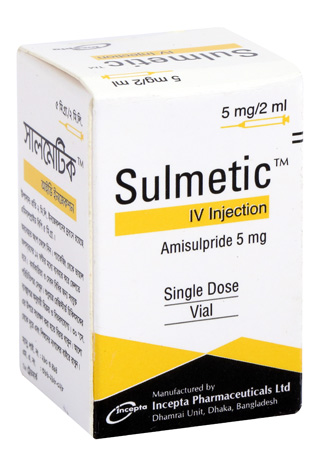
Sulmetic IV 5 mg is a specialized prescription medication used primarily for the treatment of mental health disorders and the prevention of postoperative complications. Belonging to the Antipsychotics and Antibiotics & Infectious Disease Medicines categories, it is an injectable form of the active ingredient Amisulpride. While Amisulpride is widely known for managing long-term psychiatric conditions, the intravenous (IV) formulation is often utilized in clinical settings for its rapid action.
Think of Sulmetic IV 5 mg as a precision modulator for the brain’s chemical signaling. Rather than broadly affecting the nervous system, it selectively targets specific dopamine receptors to restore balance, whether it is stabilizing mood or preventing nausea following surgery. This guide details the uses of Sulmetic IV 5 mg, its mechanism, and important safety protocols.
Drug Class and Mechanism of Action
Sulmetic IV 5 mg is classified as an “atypical antipsychotic.” Unlike older generations of antipsychotics, it has a high degree of selectivity.
Amisulpride works by binding specifically to the dopamine $D_2$ and $D_3$ receptors in the brain. At low doses, it primarily blocks presynaptic receptors, which actually increases dopamine signaling; this helps improve “negative” symptoms like social withdrawal. At higher doses, it blocks postsynaptic receptors, which reduces overactive dopamine signaling; this helps control “positive” symptoms like hallucinations. Additionally, in its injectable form, it acts on the “chemoreceptor trigger zone” to block the signals that cause vomiting.
How Sulmetic IV 5 mg Works in the Body
The versatility of Sulmetic IV 5 mg lies in its dose-dependent behavior:
-
Mental Health: It balances dopamine levels to clear thought disorders and stabilize emotions.
-
Postoperative Care: It blocks the nausea triggers often activated by anesthesia or surgical stress.
-
Selectivity: Because it has low affinity for serotonin, histamine, or muscarinic receptors, it typically causes fewer “foggy” or “dry mouth” side effects compared to traditional neuroleptics.
Medical Uses of Sulmetic IV 5 mg
Sulmetic IV 5 mg is indicated for both acute psychiatric episodes and specific surgical recovery needs.
Sulmetic IV 5 mg for Schizophrenia
It is used to treat both acute and chronic schizophrenic disorders. Benefits for patients include:
-
Control of Positive Symptoms: Reductions in delusions, hallucinations, and disorganized thinking.
-
Management of Negative Symptoms: Improvement in emotional blunting, lack of drive, and social withdrawal.
-
Stability in patients who do not respond well to first-generation antipsychotics.
Sulmetic IV 5 mg for Postoperative Nausea and Vomiting (PONV)
In many clinical settings, Amisulpride injections are used to prevent or treat nausea after surgery.
-
It is often administered as a single IV dose of 5 mg to 10 mg near the end of surgery or in the recovery room.
-
It provides a life-saving alternative for patients who cannot tolerate or do not respond to standard anti-nausea meds.
Who Can Take Sulmetic IV 5 mg?
Sulmetic IV 5 mg is a hospital-grade medication and must be administered by a healthcare professional.
Eligibility Criteria
You may be considered for Sulmetic IV 5 mg if you:
-
Are an adult suffering from acute psychotic symptoms requiring rapid stabilization.
-
Are a surgical patient with a high risk of severe postoperative vomiting.
Who Should Avoid Sulmetic IV 5 mg
Sulmetic IV 5 mg must be avoided if you have:
-
Prolactin-dependent tumors (such as certain breast or pituitary tumors).
-
Pheochromocytoma (a rare tumor of the adrenal gland).
-
Severe renal (kidney) impairment (dosage must be significantly reduced).
-
A history of “QT prolongation” (a specific heart rhythm issue).
-
Warning: It is generally not recommended for children under 18 or women who are breastfeeding.
Sulmetic IV 5 mg Dosage and Administration
Standard Dosage Guidelines
-
For Schizophrenia: While long-term treatment is usually oral (400 mg–800 mg daily), the IV form may be used for acute stabilization as directed by a psychiatrist.
-
For Nausea/Vomiting: Typically a single 5 mg to 10 mg IV injection infused over 1 to 2 minutes.
Administration Tips
-
This medication is typically administered in a hospital or clinic setting.
-
Patients with kidney issues require “dose-splitting” (reducing the dose to half or a third) because the drug is primarily cleared through the kidneys.
Side Effects of Sulmetic IV 5 mg
Common Side Effects
-
Trembling or muscle stiffness (Extrapyramidal symptoms).
-
Feeling restless (Akathisia).
-
Sleepiness or insomnia.
-
Low blood pressure/dizziness upon standing.
Serious Side Effects
-
Hyperprolactinemia: Increased levels of the hormone prolactin, which can cause breast pain or menstrual changes.
-
QT Prolongation: Changes in heart rhythm.
-
Neuroleptic Malignant Syndrome: A rare but life-threatening reaction characterized by high fever and muscle rigidity.
Frequently Asked Questions (FAQs)
1. Is Sulmetic IV 5 mg safe to take during pregnancy?
It is generally not recommended. Human data is limited, and animal studies suggest potential risks. It should only be used if the benefit clearly outweighs the risk to the fetus.
2. Can I drink alcohol while on Sulmetic IV 5 mg?
No. Alcohol can significantly increase the sedative effects of Amisulpride, leading to dangerous levels of drowsiness and lack of coordination.
3. Will Sulmetic IV 5 mg make me gain weight?
Weight gain is a known side effect of most antipsychotics, including Amisulpride, though it is often less severe than with other drugs like olanzapine.
4. How fast does the IV injection work for nausea?
When used for postoperative nausea, the effect is usually rapid, providing relief within minutes of the injection.
Medical Disclaimer: This content is for informational purposes only and does not replace professional medical advice. Always consult a qualified healthcare provider before starting or changing any medication.