
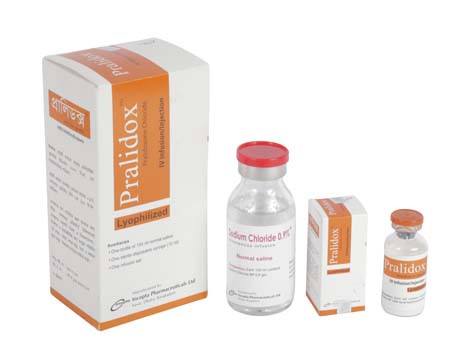
Pralidox 1000mg (Pralidoxime Chloride): Complete Guide to Uses, Dosage, Benefits, Side Effects & FAQs
Pralidox 1000mg, containing the active generic ingredient Pralidoxime Chloride, belongs to our Prescription Medicines, Antidotes & Poisoning Medicines, and Injectable Medicines categories. This medication is a critical life-saving agent designed to reverse the effects of specific types of poisoning.
Introduction to Pralidox 1000mg
Pralidox 1000mg is a prescription medicine used as an antidote to treat poisoning caused by organophosphate pesticides and chemicals. It is also used to treat overdosage of drugs used to treat myasthenia gravis. Instead of just treating the symptoms of toxicity, Pralidox 1000mg works at the molecular level to “reactivate” vital enzymes that have been shut down by toxins. Think of Pralidoxime Chloride as a molecular key that unlocks and restores the nervous system’s ability to control muscles and breathing after a chemical exposure.
Drug Class and Mechanism of Action
Pralidox 1000mg is classified as a cholinesterase reactivator. The active generic, Pralidoxime Chloride, works by removing the phosphoryl group from the “inhibited” acetylcholinesterase enzyme. Organophosphates bind to this enzyme, preventing it from breaking down acetylcholine (a neurotransmitter). This leads to a dangerous “cholinergic crisis.” Pralidoxime Chloride breaks this bond, allowing the enzyme to function again and stopping the continuous, overstimulation of muscles and glands.
How Pralidox 1000mg Works in the Body
When chemical toxins enter the bloodstream, they paralyze the body’s natural cleaning enzymes. Pralidox 1000mg enters the system to help:
-
Reactivate the acetylcholinesterase enzyme, specifically at the neuromuscular junction.
-
Restore normal communication between nerves and muscles.
-
Reverse muscle paralysis, especially the muscles used for breathing.
-
Neutralize the systemic effects of organophosphate pesticides and nerve agents.
Medical Uses of Pralidox 1000mg
Pralidox 1000mg is used in emergency medical settings for life-threatening toxic exposures.
For Organophosphate Poisoning: Pralidox 1000mg is the primary treatment for poisoning caused by pesticides (such as parathion or malathion) and related nerve agents. It is most effective when administered shortly after exposure to prevent permanent enzyme binding.
For Myasthenia Gravis Overdose: As a potent form of Pralidoxime Chloride, it is used to treat “cholinergic crisis” resulting from an overdose of medications like neostigmine or pyridostigmine.
Who Can Take Pralidox 1000mg?
Due to the emergency nature of this medication, it is administered by healthcare professionals.
-
Eligibility: Individuals with confirmed or strongly suspected organophosphate poisoning or cholinergic crisis.
-
Who Should Avoid: Individuals with a known hypersensitivity to Pralidoxime Chloride. Caution is required in patients with renal impairment, as the drug is excreted by the kidneys.
Pralidox 1000mg Dosage and Administration
Pralidox 1000mg must be administered under strict medical supervision, usually in a hospital environment.
-
Standard Dose: For adults, a dose of 1000mg to 2000mg is often given by intravenous (IV) infusion.
-
Timing: The effectiveness of Pralidoxime Chloride is highly time-dependent; it should be given as soon as possible after exposure.
-
Administration: It is typically injected into a vein (IV) or muscle (IM). For IV use, it is slowly infused over 15–30 minutes to prevent side effects.
-
Repeat Dosing: Depending on the severity of the poisoning, the dose of Pralidoxime Chloride may be repeated every few hours.
Benefits of Pralidox 1000mg
Key advantages of choosing Pralidox 1000mg include:
-
Life-Saving Efficacy: It is one of the few medications capable of reversing the physical paralysis caused by nerve toxins.
-
Targeted Action: Specifically targets the enzyme-toxin bond to restore nervous system health.
-
Critical Support: Reduces the need for prolonged mechanical ventilation in poisoning victims.
-
Medical Standard: Pralidoxime Chloride is a globally recognized essential medicine for toxicology.
Side Effects of Pralidox 1000mg
While necessary for treatment, Pralidox 1000mg can cause some side effects, especially if injected too rapidly.
-
Common Effects: Blurred vision, dizziness, headache, drowsiness, and nausea.
-
Physical Responses: Increased heart rate (tachycardia), increased blood pressure, and muscle weakness.
-
Injection Site: Pain or redness at the site where the Pralidoxime Chloride was injected.
Warnings and Precautions
During treatment with Pralidox 1000mg:
-
Atropine Co-administration: Pralidoxime Chloride is almost always used in combination with Atropine. Atropine treats the symptoms, while Pralidox treats the cause.
-
Renal Monitoring: Since it is cleared by the kidneys, dose adjustments are necessary for patients with decreased kidney function.
-
Rapid Infusion: Rapid IV injection can cause a sudden rise in blood pressure or laryngospasm.
-
Poisoning Types: It is not effective against all types of pesticides (e.g., it is generally not used for carbamate poisoning).
Frequently Asked Questions (FAQs)
1. How fast does Pralidox 1000mg work? When given intravenously, Pralidoxime Chloride begins reactivating enzymes within minutes, though full clinical recovery depends on the amount of toxin absorbed.
2. Can Pralidox 1000mg be used alone for poisoning? No. It is a part of a treatment protocol that usually includes Atropine, oxygen, and decontamination of the skin or stomach.
3. Is Pralidoxime Chloride effective for old exposures? It is less effective if the bond between the toxin and the enzyme has “aged.” Therefore, Pralidox 1000mg must be given as an emergency treatment.
Conclusion & Medical Disclaimer
Pralidox 1000mg (Pralidoxime Chloride) is a vital emergency intervention for chemical and pesticide toxicity. By restoring essential nerve enzymes, it plays a definitive role in critical care recovery. This content is for informational purposes only and does not replace professional medical advice. Always consult a qualified healthcare provider in case of a medical emergency.


