Introduction to Precedex (Dexmedetomidine) 200mcg
Precedex (Dexmedetomidine) 200mcg is a specialized prescription medicine commonly used for sedation in intensive care units (ICU) and during certain medical procedures. This medicine provides controlled sedation without causing deep respiratory depression, making it valuable in critical care settings.
Precedex (Dexmedetomidine) 200mcg is classified under Prescription Medicines, Critical Care Medicines, Sedative Agents, and Anesthetic Adjuncts. It contains Dexmedetomidine, a highly selective alpha-2 adrenergic receptor agonist that helps produce sedation, reduce anxiety, and provide mild pain relief.
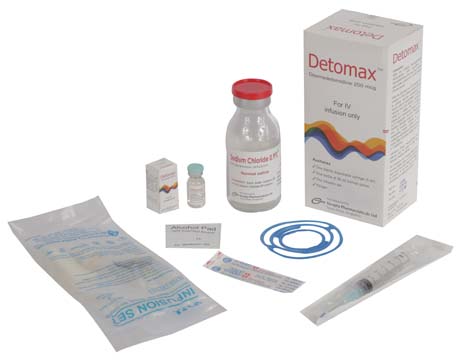
In some markets, Detomax 200mcg is available as a generic brand containing the same active ingredient Dexmedetomidine, offering similar sedative effects when administered by trained healthcare professionals.
What Is Precedex (Dexmedetomidine)?
Precedex is the brand name for Dexmedetomidine, an injectable sedative medication widely used in hospitals for short-term sedation of patients requiring intensive monitoring.
Dexmedetomidine belongs to a class of medicines known as Alpha-2 Adrenergic Agonists. These medicines act on specific receptors in the brain to produce calming and sedative effects while allowing patients to remain relatively responsive.
Generic versions such as Detomax 200mcg contain the same active compound and may be used depending on physician recommendation and hospital availability.
Drug Class and Mechanism of Action
Dexmedetomidine is classified as a selective alpha-2 adrenergic receptor agonist with sedative, anxiolytic, and mild analgesic properties.
How Dexmedetomidine Works
It works through several mechanisms:
-
Activates alpha-2 receptors in the brain to produce sedation
-
Reduces sympathetic nervous system activity
-
Provides calming effects without significant respiratory depression
Through these actions, Dexmedetomidine helps maintain patient comfort and stability during intensive care treatment or medical procedures.
How Precedex Works in the Body
The central nervous system plays a key role in regulating sleep, alertness, and stress responses.
Precedex helps regulate these signals to produce controlled sedation.
Key Actions of Dexmedetomidine
-
Produces cooperative sedation where patients can be easily awakened
-
Reduces anxiety and agitation in ICU patients
-
Provides mild pain-relieving effects
Generic options such as Detomax deliver the same active compound, enabling similar sedation management when administered by trained medical professionals.
Medical Uses of Precedex (Dexmedetomidine) 200mcg
Precedex 200mcg is commonly used in hospital and critical care environments.
Precedex for ICU Sedation
It is frequently used for sedation of patients who require mechanical ventilation or close monitoring in intensive care units.
Potential Benefits
-
Provides stable sedation levels
-
Allows patients to remain easily arousable
-
Reduces agitation and anxiety during ICU care
Generic alternatives like Detomax 200mcg may also be used under medical supervision when Dexmedetomidine therapy is required.
Precedex for Procedural Sedation
Dexmedetomidine may be used during surgical or diagnostic procedures requiring moderate sedation.
Treatment Benefits
-
Provides calm and cooperative sedation
-
Reduces need for other anesthetic medicines
-
Helps maintain stable cardiovascular and respiratory function
Who Can Take Detomax 200mcg?
Because Dexmedetomidine is a potent sedative medicine, it should only be administered by trained healthcare professionals in controlled medical environments.
Eligibility Criteria
Patients may receive Precedex if they:
-
Require sedation in an intensive care unit
-
Are undergoing medical or surgical procedures requiring monitored sedation
-
Need anxiety control during mechanical ventilation
Generic alternatives such as Detomax may be used depending on hospital protocols and physician decision.
Who Should Avoid Precedex (Dexmedetomidine) 200mcg
Precedex should NOT be used by:
-
Patients with hypersensitivity to Dexmedetomidine
-
Individuals with severe heart block without a pacemaker
-
Patients with significant uncontrolled hypotension
Precedex (Dexmedetomidine) 200mcg Dosage and Administration
Standard Dosage Guidelines
Typical administration recommendations include:
-
Given as an intravenous infusion
-
Administered under continuous medical monitoring
-
Dose determined by body weight and clinical condition
Dosage Adjustments
Doctors may adjust the dosage depending on:
-
Patient age and body weight
-
Liver function
-
Cardiovascular stability
Side Effects of Precedex 200mcg
Like other sedative medicines, Precedex may cause certain side effects.
Common Side Effects
-
Low blood pressure (hypotension)
-
Slow heart rate (bradycardia)
-
Dry mouth
-
Nausea
Serious Side Effects
-
Severe hypotension
-
Heart rhythm disturbances
-
Excessive sedation or delayed recovery
Patients receiving Dexmedetomidine are typically monitored closely to manage potential adverse effects.
Storage:
Store below 25°C in a cool, dry place, protected from light. Keep vials in their original packaging and out of reach of children.
Frequently Asked Questions (FAQs)
1. Is Precedex (Dexmedetomidine) 200mcg used for anesthesia?
Precedex is not a full anesthetic but is commonly used as a sedative adjunct during anesthesia and medical procedures.
2. Does Dexmedetomidine affect breathing?
Unlike many sedatives, Dexmedetomidine generally causes minimal respiratory depression when used appropriately.
3. Is Precedex used only in hospitals?
Yes. It is usually administered in hospitals or intensive care units under medical supervision.
4. Can Dexmedetomidine reduce anxiety during procedures?
Yes. It helps calm patients and reduce anxiety while maintaining cooperative sedation.
5. Is Detomax 200mcg the same as Precedex?
Detomax 200mcg contains Dexmedetomidine, the same active ingredient found in Precedex.
6. How quickly does Dexmedetomidine work?
Sedation usually begins within minutes after intravenous administration.
7. Do patients need monitoring while receiving Detomax?
Yes. Continuous monitoring of heart rate, blood pressure, and sedation level is required during treatment.
Medical Disclaimer
Disclaimer:
The information provided on this page is for educational and informational purposes only and should not be considered medical advice. Precedex (Dexmedetomidine) is a prescription medicine used in controlled medical settings. Always consult a qualified healthcare professional before using or administering any medication.