
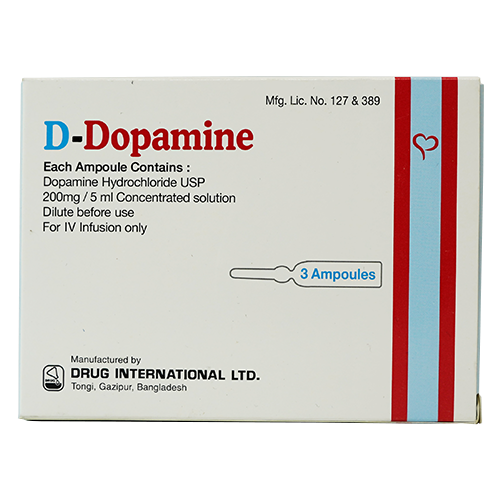
Introduction to Intropin (Dopamine Hydrochloride) 200mg
Intropin (Dopamine Hydrochloride) 200mg is a prescription medicine used in emergency and critical care settings to support blood pressure, heart function, and circulation in seriously ill patients. Intropin (Dopamine Hydrochloride) 200mg is commonly used in shock, severe hypotension, and certain cardiac conditions where rapid hemodynamic support is needed.
Intropin (Dopamine Hydrochloride) 200mg is classified under Prescription Medicines, Critical Care Medicines, Vasopressor Drugs, and Injectable Cardiovascular Therapies. It contains Dopamine Hydrochloride, which works by stimulating specific receptors in the body to improve cardiac output, blood pressure, and blood flow to vital organs.
In some markets, D-Dopamine 200mg is available as a local brand containing the same active ingredient Dopamine Hydrochloride, offering a similar therapeutic effect when prescribed by a qualified healthcare professional.
What Is Intropin (Dopamine Hydrochloride)?
Intropin (Dopamine Hydrochloride) 200mg is associated with Dopamine Hydrochloride, an injectable medicine widely used for hemodynamic support in emergency and intensive care settings.
Dopamine Hydrochloride belongs to a class of medicines known as Vasopressors and Inotropic Agents. These medicines help improve heart pumping activity and support blood pressure in patients with circulatory collapse or severe cardiovascular instability.
Generic or local brands such as D-Dopamine 200mg contain the same active compound and may be used depending on physician recommendation and regional availability.
Drug Class and Mechanism of Action
Dopamine Hydrochloride is classified as a vasopressor and inotropic medicine with cardiovascular stimulant properties.
How Dopamine Hydrochloride Works
It works in several ways:
- Stimulates dopamine receptors at lower doses
- Increases heart contractility at moderate doses
- Raises blood pressure through vasoconstriction at higher doses
- Helps improve blood flow to essential organs in selected situations
Through these mechanisms, Dopamine Hydrochloride helps stabilize circulation in critically ill patients.
How Intropin Works in the Body
In emergency conditions such as shock or severe hypotension, the body may not maintain enough blood flow to vital organs. Intropin (Dopamine Hydrochloride) 200mg helps improve circulation, support blood pressure, and enhance heart performance under close medical monitoring.
Key Actions of Dopamine Hydrochloride
- Supporting blood pressure in shock states
- Improving cardiac output
- Enhancing circulation to vital organs
- Assisting in acute critical care management
Some local brands such as D-Dopamine deliver the same active compound, allowing similar emergency cardiovascular support when prescribed appropriately.
Medical Uses of Intropin (Dopamine Hydrochloride) 200mg
Intropin (Dopamine Hydrochloride) 200mg is widely used in emergency and intensive care medicine.
Intropin for Shock and Hypotension
For patients with severe hypotension or shock, Intropin is commonly used to support blood pressure and circulation.
Potential Benefits
- Increased blood pressure support
- Improved organ perfusion
- Better cardiac output
- Rapid hemodynamic stabilization
Local alternatives like D-Dopamine 200mg may also be used under medical supervision when Dopamine Hydrochloride therapy is recommended.
Intropin for Critical Cardiovascular Support
This medicine is also used in selected acute cardiac and circulatory conditions requiring vasopressor or inotropic treatment.
Treatment Benefits
- Supports emergency cardiovascular function
- Helps maintain blood flow during critical illness
- Useful in intensive care settings
- Can assist short-term stabilization in selected patients
Who Can Take D-Dopamine 200mg?
Because Dopamine Hydrochloride is a potent critical care medicine, treatment should always be supervised by an experienced healthcare provider in a monitored medical setting.
Eligibility Criteria
Patients may be prescribed Intropin if they:
- Have severe hypotension or shock
- Need emergency cardiovascular support
- Require monitored vasopressor or inotropic therapy
- Are being treated in a hospital or intensive care environment
Certain local options such as D-Dopamine may also be considered depending on availability and physician decision.
Who Should Avoid Intropin (Dopamine Hydrochloride) 200mg
Intropin should NOT be used by:
- Individuals with hypersensitivity to Dopamine Hydrochloride
- Patients with untreated pheochromocytoma
- Individuals with uncorrected tachyarrhythmias or ventricular fibrillation
- Patients in whom vasopressor therapy is unsuitable without specialist evaluation
Intropin (Dopamine Hydrochloride) 200mg Dosage and Administration
Standard Dosage Guidelines
Typical dosage recommendations include:
- Intropin (Dopamine Hydrochloride) 200mg is given by intravenous infusion
- Administered only under strict hospital supervision
- Dose is individualized according to patient response
- Continuous monitoring of blood pressure, heart rate, and organ perfusion is required
Dosage Adjustments
Doctors may adjust the dose depending on:
- Severity of shock or hypotension
- Blood pressure response
- Heart rate and rhythm
- Kidney perfusion and urine output
- Overall clinical condition
Side Effects of Intropin 200mg
Like all vasopressor medicines, Intropin may cause side effects.
Common Side Effects
- Fast heartbeat
- Palpitations
- Headache
- Nausea
- Anxiety
Serious Side Effects
- Arrhythmias: Irregular heartbeat or tachycardia
- Severe Hypertension: Excessive blood pressure rise
- Tissue Damage: If leakage occurs outside the vein
- Reduced Blood Flow: In some body areas at high doses
Patients should be monitored closely and any unusual symptoms should be addressed immediately by the medical team.
Storage:
Store as directed on the product label, protected from light and excessive heat. Keep the ampoules or vials in their original packaging and out of reach of children.
Frequently Asked Questions (FAQs)
1. Is Intropin (Dopamine Hydrochloride) 200mg used outside the hospital?
No. It is typically used only in hospital or intensive care settings under continuous medical monitoring.
2. What is D-Dopamine 200mg used for?
D-Dopamine 200mg is used for severe hypotension, shock, and critical cardiovascular support when prescribed by a doctor.
3. Is Intropin (Dopamine Hydrochloride) 200mg a blood pressure medicine?
It is used to support blood pressure in emergency situations, but it is not a routine oral blood pressure medicine for long-term use.
4. Why does this medicine need close monitoring?
Because Dopamine Hydrochloride can strongly affect heart rate, blood pressure, and circulation, continuous monitoring is necessary for safety.
5. Can pregnant women receive D-Dopamine 200mg?
It should only be used during pregnancy in critical situations if specifically decided by a doctor after assessing the risks and benefits.
6. Is D-Dopamine 200mg the same as Intropin?
D-Dopamine 200mg contains Dopamine Hydrochloride, the same active ingredient found in Intropin. Generic or local branded versions may be available depending on the market.
7. Do I need a prescription to buy D-Dopamine (Dopamine Hydrochloride) 200mg?
Yes. D-Dopamine 200mg is a prescription-only medicine and should only be used under the supervision of a qualified healthcare professional.
Medical Disclaimer
Disclaimer:
The information provided on this page is for educational and informational purposes only and should not be considered medical advice. Intropin (Dopamine Hydrochloride) 200mg is a prescription-only medication and must be used strictly under the supervision of a qualified healthcare professional. Always consult your physician before starting, stopping, or changing any medication.


