Introduction to Larodopa (Levodopa) 250mg
Larodopa (Levodopa) 250mg is a prescription medicine used to treat symptoms of Parkinson’s disease and other conditions associated with dopamine deficiency in the brain. Larodopa (Levodopa) 250mg helps improve movement-related symptoms such as stiffness, slowness, tremor, and difficulty with walking by increasing dopamine levels in the central nervous system.
Larodopa (Levodopa) 250mg is classified under Prescription Medicines, Neurology Medicines, Antiparkinsonian Drugs, and Oral Dopaminergic Therapies. It contains Levodopa, which works by converting into dopamine in the brain and helping restore neurotransmitter balance involved in motor control.
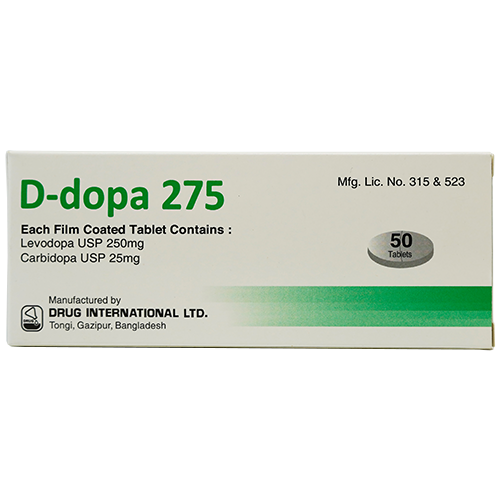
In some markets, D-Dopa 250mg is available as a local brand containing the same active ingredient Levodopa, offering a similar therapeutic effect when prescribed by a qualified healthcare professional.
What Is Larodopa (Levodopa)?
Larodopa (Levodopa) 250mg is associated with Levodopa, an oral medicine widely used for the treatment of Parkinson’s disease and parkinsonian symptoms.
Levodopa belongs to a class of medicines known as Dopaminergic Agents or Antiparkinsonian Medicines. These medicines help replenish dopamine deficiency in the brain and improve motor symptoms.
Generic or local brands such as D-Dopa 250mg contain the same active compound and may be used depending on physician recommendation and regional availability.
Drug Class and Mechanism of Action
Levodopa is classified as a dopaminergic antiparkinsonian medicine with central nervous system activity.
How Levodopa Works
It works in several ways:
- Crosses the blood-brain barrier
- Converts into dopamine in the brain
- Helps improve motor control
- Reduces symptoms caused by dopamine deficiency
Through these mechanisms, Levodopa helps manage movement-related symptoms in Parkinson’s disease.
How Larodopa Works in the Body
In Parkinson’s disease, dopamine-producing brain cells become depleted, causing movement problems and impaired coordination. Larodopa (Levodopa) 250mg helps restore dopamine levels and improve motor function under medical supervision.
Key Actions of Levodopa
- Increasing dopamine levels in the brain
- Improving stiffness and slowness of movement
- Helping reduce tremor in some patients
- Supporting better physical mobility and daily functioning
Some local brands such as D-Dopa deliver the same active compound, allowing similar antiparkinsonian treatment when prescribed appropriately.
Medical Uses of Larodopa (Levodopa) 250mg
Larodopa (Levodopa) 250mg is widely prescribed for movement disorders related to dopamine deficiency.
Larodopa for Parkinson’s Disease
For patients with Parkinson’s disease, Larodopa is commonly used to improve motor symptoms and daily activity.
Potential Benefits
- Better mobility
- Reduced muscle stiffness
- Improved walking and movement control
- Support for daily function in Parkinson’s disease
Local alternatives like D-Dopa 250mg may also be used under medical supervision when Levodopa therapy is recommended.
Larodopa for Parkinsonian Symptoms
This medicine may also be used in selected patients with parkinsonian symptoms caused by other neurological conditions as advised by a healthcare professional.
Treatment Benefits
- Helps improve dopamine-related symptoms
- Supports movement control
- May reduce physical slowness and rigidity
- Useful in long-term neurological symptom management
Who Can Take D-Dopa 250mg?
Because Levodopa is a prescription neurology medicine, treatment should always be supervised by an experienced healthcare provider.
Eligibility Criteria
Patients may be prescribed Larodopa if they:
- Have Parkinson’s disease
- Experience dopamine deficiency-related movement problems
- Need dopaminergic symptom control
- Can follow regular monitoring and treatment instructions
Certain local options such as D-Dopa may also be considered depending on availability and physician decision.
Who Should Avoid Larodopa (Levodopa) 250mg
Larodopa should NOT be used by:
- Individuals with hypersensitivity to Levodopa
- Patients with narrow-angle glaucoma unless medically evaluated
- Individuals with suspicious undiagnosed skin lesions or history of melanoma unless advised by a doctor
- Patients using certain interacting medicines unless specifically prescribed by a specialist
Larodopa (Levodopa) 250mg Dosage and Administration
Standard Dosage Guidelines
Typical dosage recommendations include:
- Larodopa (Levodopa) 250mg as prescribed by the doctor
- Dose is individualized according to symptoms and response
- Usually taken in divided doses depending on treatment plan
- Follow the prescribed schedule carefully
Dosage Adjustments
Doctors may adjust the dose depending on:
- Severity of Parkinson’s symptoms
- Response to treatment
- Side effects and tolerability
- Age and general health condition
- Use of other antiparkinsonian medicines
Side Effects of Larodopa 250mg
Like all antiparkinsonian medicines, Larodopa may cause side effects.
Common Side Effects
- Nausea
- Dizziness
- Vomiting
- Headache
- Loss of appetite
Serious Side Effects
- Dyskinesia: Involuntary movements with prolonged use
- Hallucinations: Especially in susceptible patients
- Low Blood Pressure: Particularly on standing
- Severe Mood or Behavioral Changes: In some patients
Patients should report any unusual symptoms to their doctor immediately.
Storage:
Store below 30°C in a cool, dry place, protected from moisture and direct sunlight. Keep the tablets in their original packaging and out of reach of children.
Frequently Asked Questions (FAQs)
1. Is Larodopa (Levodopa) 250mg used for Parkinson’s disease?
Yes. It is commonly used to treat movement symptoms of Parkinson’s disease.
2. Can D-Dopa 250mg be taken long term?
Yes. Many patients use Levodopa long term under regular neurological supervision.
3. Is Larodopa (Levodopa) 250mg the same as dopamine?
No. Levodopa is converted into dopamine in the brain after it is taken.
4. Can this medicine cause involuntary movements?
Yes. Long-term use may lead to dyskinesia in some patients.
5. Can pregnant women take D-Dopa 250mg?
This medicine should only be used during pregnancy if specifically advised by a doctor after assessing the risks and benefits.
6. Is D-Dopa 250mg the same as Larodopa?
D-Dopa 250mg contains Levodopa, the same active ingredient found in Larodopa. Generic or local branded versions may be available depending on the market.
7. Do I need a prescription to buy D-Dopa (Levodopa) 250mg?
Yes. D-Dopa 250mg is a prescription-only medicine and should only be used under the supervision of a qualified healthcare professional.
Medical Disclaimer
Disclaimer:
The information provided on this page is for educational and informational purposes only and should not be considered medical advice. Larodopa (Levodopa) 250mg is a prescription-only medication and must be used strictly under the supervision of a qualified healthcare professional. Always consult your physician before starting, stopping, or changing any medication.