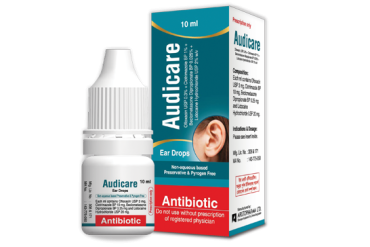
Audicare Ear Drop 10mg (Chloramphenicol): Complete Guide to Uses, Dosage, Benefits, Side Effects & FAQS
Audicare Ear Drop 10mg is a specialized prescription medication categorized under Antibiotics & Infectious Disease Medicines and Topical Medicines. This guide provides a comprehensive overview of Audicare Ear Drop 10mg, featuring the active generic ingredient Chloramphenicol, to help you understand its role in treating ear infections.
H4: Introduction to Audicare Ear Drop 10mg
Audicare Ear Drop 10mg is a potent antibiotic solution used primarily to treat bacterial infections of the outer ear canal (otitis externa). Unlike treatments that only mask symptoms, Audicare Ear Drop 10mg works at the bacterial level to eliminate the source of the infection. It is a targeted therapy designed to control excessive bacterial growth and reduce associated inflammation.
H4: Drug Class and Mechanism of Action
The active ingredient in Audicare Ear Drop 10mg is Chloramphenicol, which belongs to the class of broad-spectrum antibiotics. It works by interrupting the protein synthesis of bacteria, effectively stopping them from growing and multiplying. This targeted action allows the body’s natural defenses to clear the remaining infection while avoiding unnecessary systemic overactivity.
H4: Medical Uses of Audicare Ear Drop 10mg
Audicare Ear Drop 10mg is approved for several localized conditions where bacterial presence is a concern:
-
Acute Otitis Externa: Effective for treating “swimmer’s ear” or infections of the outer ear tube.
-
Chronic Suppurative Otitis Media: Used in specific cases of middle ear infection with discharge.
-
Post-Surgical Care: Sometimes prescribed to prevent infection after ear surgery.
H4: Who Can Use Audicare Ear Drop 10mg?
Proper medical evaluation is essential before starting treatment with Chloramphenicol.
-
Eligibility: Adults and children (under supervision) with diagnosed bacterial ear infections who have not responded to milder antiseptic drops.
-
Who Should Avoid: Individuals with a perforated eardrum (unless directed by a specialist), those with a history of bone marrow suppression, or individuals allergic to Chloramphenicol.
H4: Dosage and Administration
For best results, follow these standard guidelines for Audicare Ear Drop 10mg:
-
Typical Dose: Usually 2–3 drops into the affected ear, two to three times daily.
-
Administration: Wash hands before use, tilt the head to one side, and keep the ear tilted upward for a few minutes after application.
-
Missed Dose: Apply it as soon as you remember, but skip it if it is nearly time for your next dose. Do not “double up”.
H4: Benefits of Audicare Ear Drop 10mg
-
Targeted Relief: Delivers the antibiotic directly to the site of infection.
-
Fast Action: Many patients notice a reduction in pain and discharge within 24 to 48 hours.
-
Ease of Use: Convenient topical application avoids the side effects of oral antibiotics.
H4: Side Effects of Audicare Ear Drop 10mg
While generally well-tolerated, Audicare Ear Drop 10mg may cause some reactions:
-
Common Side Effects: Local stinging or burning, itching, or mild skin irritation in the ear canal.
-
Serious Side Effects: Rare but serious reactions include hypersensitivity (rash), or prolonged use leading to secondary fungal infections. Seek medical attention if you experience extreme ear pain or sudden hearing loss.
H4: Frequently Asked Questions (FAQs)
-
Is Audicare Ear Drop 10mg a steroid? No, it is a pure antibiotic containing Chloramphenicol; it does not contain corticosteroids.
-
Can I use it with food? As a topical ear drop, it is not affected by food intake.
-
How long should I use it? Continuous treatment is usually required for 7 to 10 days; do not stop early even if symptoms improve.
H4: Conclusion
Audicare Ear Drop 10mg, featuring the generic Chloramphenicol, is a reliable and targeted therapy for bacterial ear infections. By addressing the infection at its source, it helps reduce pain and restore ear health effectively. Always consult a healthcare provider to ensure this medication is appropriate for your specific condition