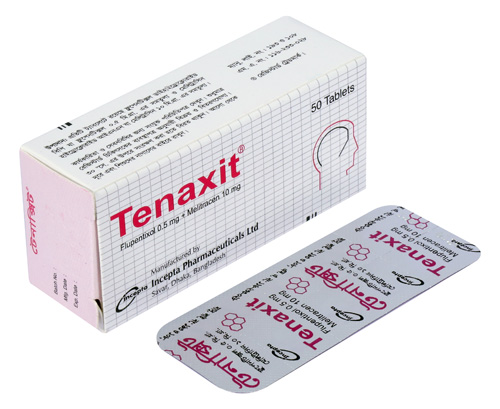
Tenaxit 10 mg (Flupentixol & Melitracen): Complete Guide to Uses, Dosage, Benefits, Side Effects & FAQs
Introduction to Tenaxit 10 mg
Tenaxit is a combination prescription medicine used to treat various forms of anxiety and depression. Categorized under Neurology & Psychiatry Medicines, Antidepressants, and Prescription Medicines, it is uniquely formulated to provide both mood elevation and physical relaxation. Instead of using a single agent, Tenaxit 10 mg combines two different types of psychiatric medications to target a broader range of emotional and physical symptoms.
Think of Tenaxit as a dual-action mood stabilizer. The combination of Flupentixol & Melitracen works together to lift the low mood associated with depression while simultaneously calming the physical symptoms of anxiety. This guide provides a detailed overview of what Tenaxit is, how it works, and how it is used to manage mental health conditions.
Drug Class and Mechanism of Action
Tenaxit is a combination of a neuroleptic (Flupentixol) and a thymoleptic (Melitracen).
The two active ingredients, Flupentixol & Melitracen, function synergistically in the brain:
-
Flupentixol (0.5 mg): In low doses, this neuroleptic acts as an antidepressant and anxiolytic. it blocks dopamine receptors in the brain to reduce agitation and anxiety.
-
Melitracen (10 mg): This is a bipolar thymoleptic (a type of tricyclic antidepressant) with activating properties. It increases the levels of chemical messengers like serotonin and norepinephrine, which helps improve mood and increase energy.
How Tenaxit Works in the Body
When taken orally, Tenaxit balances the chemical activity in the central nervous system. It manages psychiatric symptoms by:
-
Improving interest and motivation in daily activities.
-
Reducing feelings of tension, apprehension, and fear.
-
Stabilizing mood swings and increasing mental alertness.
-
Relieving physical symptoms caused by psychological distress (psychosomatic disorders).
Medical Uses of Tenaxit 10 mg
Tenaxit is indicated for patients suffering from mild to moderate depression and anxiety.
Tenaxit for Depression and Anxiety
Tenaxit is a primary choice for “masked depression”—where emotional distress manifests as physical pain or discomfort. Benefits for patients include:
-
Relief from apathy and loss of interest.
-
Reduction in the constant “worry” associated with anxiety disorders.
-
Improvement in depressive symptoms during menopause or for those recovering from substance abuse.
Tenaxit for Psychosomatic Affections
It is often used when mental stress causes physical symptoms such as:
-
Nervous stomach or digestive issues.
-
Tension headaches.
-
Fatigue that does not improve with rest.
Who Can Take Tenaxit?
Tenaxit is a specialized medication that must be initiated by a psychiatrist or a general practitioner familiar with mental health therapy.
Eligibility Criteria
You may be considered for Tenaxit if you:
-
Have a confirmed diagnosis of anxiety or depression.
-
Are an adult looking for a treatment that manages both low mood and restlessness.
Who Should Avoid Tenaxit
Tenaxit may not be appropriate for individuals who:
-
Have recently had a heart attack (myocardial infarction).
-
Have severe heart conduction defects.
-
Have untreated narrow-angle glaucoma.
-
Are currently taking or have taken MAO inhibitors within the last 14 days.
-
Are in an “excitable” or “overactive” state, as the drug’s activating effect could worsen these symptoms.
Tenaxit Dosage and Administration
Standard Dosage Guidelines
-
Adults: Usually 2 tablets daily, taken orally in the morning and at noon.
-
Severe Cases: The morning dose may be increased to 2 tablets (total of 3 tablets per day).
-
Elderly Patients: Typically 1 tablet in the morning.
-
Maintenance: Usually 1 tablet in the morning.
Administration Tips
-
Take the tablets with water. They can be taken with or without food.
-
Avoid taking Tenaxit late in the evening if it causes insomnia.
-
Do not stop the medication suddenly, as this can lead to a relapse of symptoms.
Side Effects of Tenaxit
Common Side Effects
-
Dry mouth.
-
Constipation.
-
Transient restlessness or insomnia.
-
Blurred vision.
Serious Side Effects
-
Rapid heartbeat (tachycardia).
-
Difficulty urinating.
-
Muscle rigidity or tremors (extrapyramidal symptoms).
-
Sudden drop in blood pressure when standing up (orthostatic hypotension).
Frequently Asked Questions (FAQs)
1. Is Tenaxit 10 mg addictive?Tenaxit is not classified as a narcotic or a highly addictive benzodiazepine, but the body can become accustomed to it. It should always be tapered off gradually under medical supervision.
2. Can I drink alcohol while taking Tenaxit? No. Alcohol can significantly increase the sedative effects of Tenaxit, leading to extreme drowsiness and impaired coordination.
3. How long does it take for Tenaxit to work? While the calming effect on anxiety may be felt within a few days, the full antidepressant effect of Flupentixol & Melitracen usually takes 2 to 3 weeks of consistent use.
4. Does Tenaxit cause weight gain?Yes, some patients experience an increase in appetite and weight gain while taking this medication.
Medical Disclaimer: This content is for informational purposes only and does not replace professional medical advice. Always consult a qualified healthcare provider before starting or changing any psychiatric medication.